


“Fox parvovirus” detection across European swine farms
by Sebastiaan Theuns
Sample type
Oral-respiratory swab, pool of 5 animals, suckling piglets
Case discussion
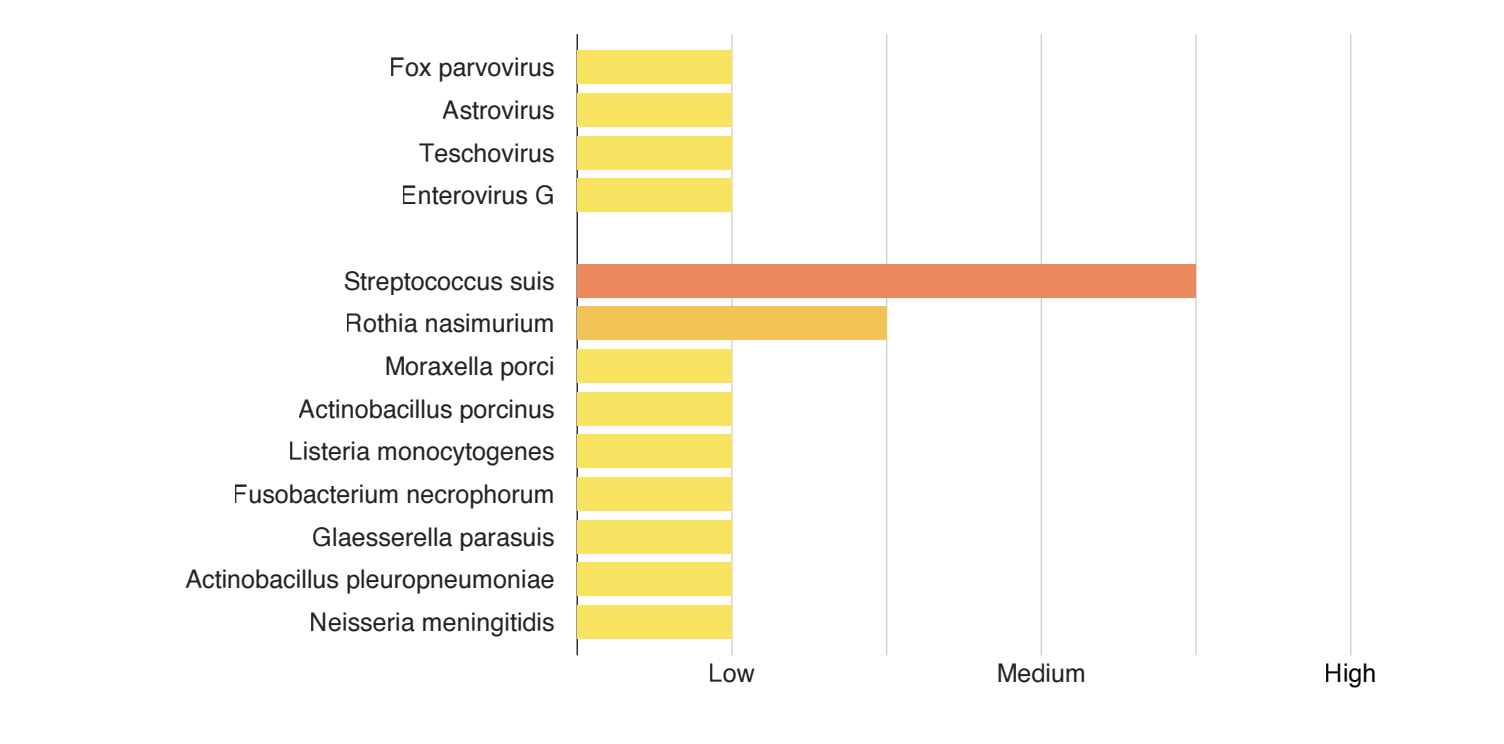
In this case, healthy piglets from a Spanish swine farm were screened for the presence of potential respiratory pathogens at the end of the suckling stage. To avoid invasive sampling in these young piglets, a combination of an oral and respiratory swab was collected.
This case taught us that the piglets' oral/respiratory tract was already strongly colonized with typical respiratory bacteria such as Streptococcus suis, Glaesserella parasuis, Actinobacillus pleuropneumoniae. From all PathoSense results, we know that Rothia nasimurium, Moraxella porci and Neisseiria sp are quite commonly found respiratory bacteria as well. In the context of this monitoring, this case teaches us that these animals might be at risk for respiratory disease problems at a later time. When the right triggers are present, the detection of virulence factors (now limited to epf from S. suis) and certain respiratory bacteria (eg APP…) might be worsened. The advice would be to monitor the situation closely on this farm for environmental factors and respiratory viral infections to avoid the further emergence of a stronger porcine respiratory disease complex.
Intriguingly, “fox parvovirus” was detected in the current case as well. With PathoSense Diagnostics, this virus was detected for the first time in pig fetuses in Germany in the Summer of 2024. At that time it was very difficult to position this detection of the virus in pigs. Next, it was found to be more commonly detected in pigs from the Netherlands as of 2025. This followed the more widespread detection of the virus in certain areas of Belgium, Germany, Denmark and Spain. This indicates that this relatively newly found parvovirus that is closely related to a fox parvovirus, is commonly present in European swine (younger pigs to fattening pigs). Genetic analysis of the Danish strains indicated that the virus was more related between farms than that it was related to the virus found in fox feces. This indicates the wider spreading of the virus across farms. The virus has been linked to exophthalmia and skin lesions, including rough hair. However, the causal link between the fox virus and the clinical disease still needs to be proven through Koch's postulates.
Further monitoring is assured.
Want to learn more about a swine pathogen? Find all info in the PathoSense Knowledge Hub
Did you know we recently launched the PathoSense Knowledge Hub? Here you'll find info on the most important pathogens that we found common with PathoSense Diagnostics. For us, the finding of certain ‘novel’ viruses or bacteria can often be more obvious, but we acknowledge that it can be very difficult to interpret them when you see them appearing for the first time on an actual result. The PathoSense Knowledge Hub also contains sampling tips and guidelines, insights on complexes per organ system, cases, podcast episodes, and national antibiotic guidelines. More species are coming soon!
Discover the PathoSense Knowledge Hub →