


The critical role of sequencing-based virulence monitoring in asymptomatic swine populations
by Sebastiaan Theuns & Adelaide Panattoni
Virulence factor detection
Streptococcus: Epf (Extracellular protein factor)
Sample type
Pooled tracheobronchial swab, gilts
Case discussion
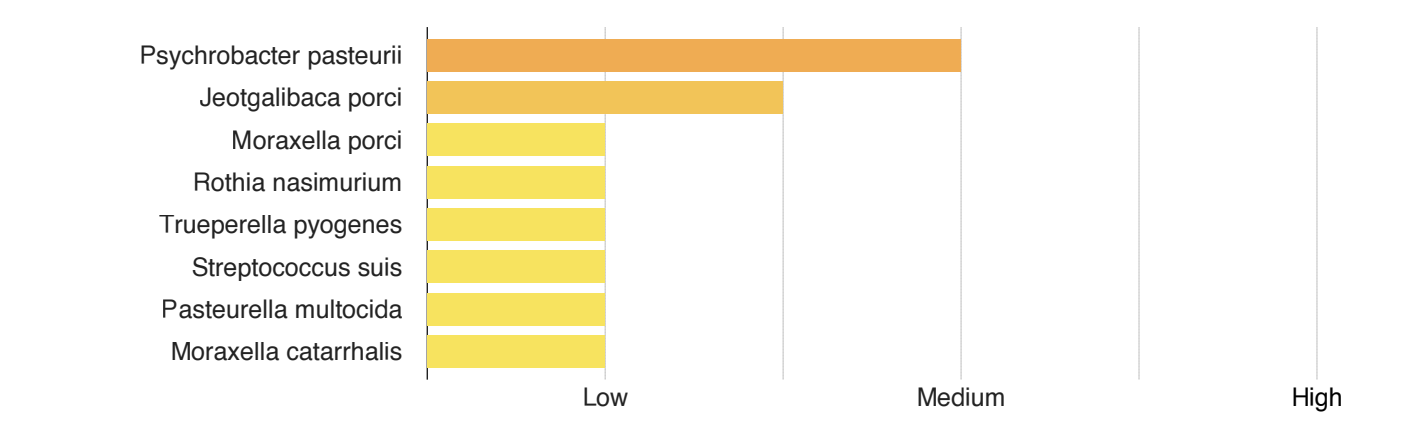
A pooled tracheobronchial swab was submitted for sequencing to screen gilts before introducing them into a new herd. The sequencing results revealed the presence of several microorganisms, including Streptococcus suis, Pasteurella multocida, and Trueperella pyogenes. Because these bacteria are opportunistic pathogens and can also be part of normal flora, this profile could have been dismissed as a “standard” result.
However, the PathoSense virulence factor (VF) detection module flagged a hidden threat: the detected S. suis strain carried the epf gene, which encodes the extracellular factor (EF). In S. suis research, EF is one of the classical markers associated with virulent, invasive strains, particularly of serotype 2 (Smith et al., 1993; Vilaró et al., 2025).
Because these animals were asymptomatic carriers, introducing them to a herd not yet exposed to this strain would have presented a severe biosecurity risk. Under the stress of transport, ventilation changes, or co-mingling, this strain could have rapidly multiplied and triggered a clinical outbreak in the receiving population.
This case demonstrates exactly why standard diagnostics fall short for proactive herd screening. Simply identifying bacterial species is no longer sufficient. Leveraging sequencing to detect underlying virulence factors is essential to accurately assess risk, uncover pathogenic strains masquerading as harmless commensals, and prevent outbreaks before they begin.
Virulence factor detection is already available in certain countries: contact us if interested.
Getting the most out of a TBS swab
A tracheobronchial swab is only as good as the moment and the animal you take it from. Field-tested tips from a swine vet who has sampled 100+ herds for respiratory work.
⏱️ Sample in the acute phase Metagenomics on a TBS needs to be done in the acute phase. Influenza in particular peaks for only a few days; two days too late and a co-infection may take over while the primary virus is already gone. Tell the herd vet to call the moment coughing starts, not days after. If the group is already past acute, skip it and sample the next group if you are willing to focus on viral infections rather than bacterial co-infections.
🩺 Pick the right animals Within the group, swab the animals coughing right now, untreated and actively symptomatic. Walk the pen with two people and a marker spray, tag every cougher you hear so you have enough candidates when it's time to sample. Freshly recovered or not-yet-sick animals won't help you here.
💆🏻 Work calm, let the animal help you Lay your materials out first and have the catheter in hand before anyone catches the animal. Only then restrain it, so you can swab fast. A squealing, gasping animal is your friend: the open airway lets the catheter slide into the trachea. If you doubt that you have placed it in the oesophagus, then discard that catheter, take a fresh one and move to another animal to avoid detection of irrelevant bacteria. Make sure the animal stands square so you reach the trachea cleanly.
🐖 Sows need three people A sow is big with plenty of room, but it's not without risk. Work with three: one on the snare, one holding a proper mouth gag to keep the mouth open, one placing the catheter. Trust each other, and if anything goes wrong, drop everything at once. A bite or a head-butt isn't worth it.
🆒 Keep samples cool, move fast Get the samples cold and to the lab as quickly as possible. Warmth lets unwanted bacteria overgrow and degrades enveloped viruses, both cost you the diagnosis. If you can, sample early in the week to avoid a weekend in transit.
Exploring the functional microbiome of pigs within the porcine respiratory disease complex: viral-bacterial co-infections and virulence factor profiling
Panattoni A, De Boeck I, Wittouck S, Deffner P, Lillie-Jaschniski K, Stadler J, Lebeer S, Theuns S. 2026.
Microbiology Spectrum
Our colleague, R&D scientist Adelaide Panattoni, shares new research offering insights into the composition of the swine respiratory tract microflora, opening new perspectives on its correlation with viral infections, functional characteristics, and overall health conditions. Moreover, the present study provides technical advancement on the possibility of extracting and amplifying bacterial DNA from low-biomass respiratory samples, with the resulting possibility of identifying virulence factors and better understanding their contribution to the disease state. These discoveries pave the way for future studies aimed at improving diagnostic accuracy and treatment strategies for respiratory disease in both veterinary and human medicine.